
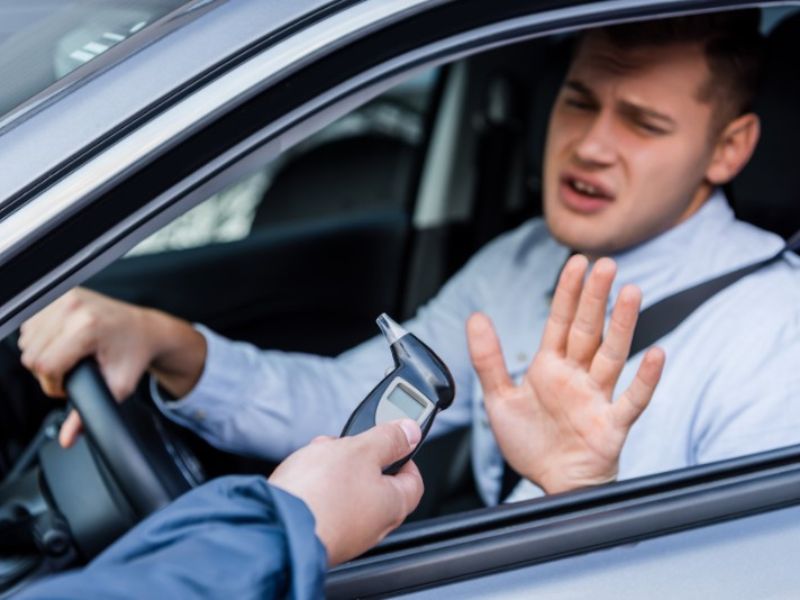
Can you refuse a breathalyzer test in Arizona? The answer depends in part on what type of test law enforcement is asking you to take and when the request occurs.
A roadside breath test used during a DUI investigation is different from the chemical testing requested after a DUI arrest under Arizona’s implied-consent law. Refusing post-arrest testing can result in driver’s license consequences, including a license suspension.
Understanding this distinction can help you better understand what happens during a DUI investigation and the potential consequences of refusing chemical testing.
Understanding Arizona’s Implied-Consent Law
Arizona’s implied-consent law applies to chemical testing after a person is arrested for driving or being in actual physical control of a vehicle while under the influence.
Under Arizona Revised Statutes § 28-1321, a person who operates a motor vehicle in Arizona gives consent to testing of their blood, breath, urine, or other bodily substance under circumstances outlined by the law.
Refusing a qualifying chemical test after an arrest can result in administrative driver’s license consequences. A first refusal generally results in a 12-month suspension. A second or subsequent refusal within 84 months can result in a two-year suspension.
These license consequences are separate from the outcome of a DUI criminal case.
Roadside Breath Tests vs. Post-Arrest Chemical Tests
Not every breath test requested during a DUI investigation is the same.
A preliminary breath test (PBT) may be used at the roadside as part of an officer’s DUI investigation. The results may help law enforcement evaluate whether alcohol is present and determine how to proceed with the investigation.
Post-arrest chemical testing is different. After a DUI arrest, law enforcement may request a breath, blood, urine, or other qualifying test under Arizona’s implied-consent law. Refusing this testing can trigger the driver’s license consequences established by Arizona law.

What Happens If You Refuse a Roadside Breath Test?
A roadside preliminary breath test and a post-arrest chemical test are not interchangeable. The consequences of refusing can depend on which test is being requested and the circumstances of the DUI investigation.
Refusing a roadside breath test also does not necessarily end the investigation. An officer may consider other information, such as driving behavior, physical observations, statements, or field sobriety testing when determining whether there is probable cause for an arrest.
If an arrest occurs, law enforcement may then request chemical testing under Arizona’s implied-consent law.
What Happens If You Refuse Chemical Testing After a DUI Arrest?
Refusing qualifying chemical testing after a DUI arrest can result in driver’s license consequences under Arizona’s implied-consent law.
A first refusal generally results in a 12-month driver’s license suspension. A second or subsequent refusal within 84 months can result in a two-year suspension.
Refusing testing does not necessarily prevent law enforcement from obtaining chemical evidence. Depending on the circumstances, law enforcement may seek a search warrant authorizing the collection of a sample.
A refusal also does not prevent the state from pursuing a DUI charge based on other available evidence.

Why the Type of Breath Test Matters
The distinction between a roadside breath test and post-arrest chemical testing is important because different legal rules and consequences may apply.
The circumstances of every DUI investigation are different. The type of test requested, whether an arrest has occurred, and whether law enforcement obtains a warrant can all affect what happens next.
If you are unsure what type of test was requested or what a refusal means for your driver’s license or DUI case, a DUI attorney can review the circumstances and explain the legal process.
Arizona DUI FAQs
Questions about breath tests and DUI charges can get confusing quickly. These FAQs cover some of the most common concerns Arizona drivers have after being stopped or arrested for suspected DUI.
Does Refusing a Breath Test Mean I Am Admitting Guilt?
No. Refusing a breath test is not the same as admitting guilt. However, a refusal can still have legal and administrative consequences and may become part of the evidence considered in a DUI case.
What Happens If I Refuse a Breath Test After a DUI Arrest in Arizona?
Under Arizona’s implied-consent law, refusing a required chemical test after a DUI arrest can result in a driver’s license suspension. A first refusal generally carries a 12-month suspension, while a second or subsequent refusal within 84 months can result in a two-year suspension.
Can I Still Be Charged With DUI If I Refuse a Breath Test?
Yes. Refusing a breath test does not prevent a DUI charge. Law enforcement may rely on other evidence, including driving behavior, field sobriety testing, officer observations, or the results of another chemical test.
Can Arizona Police Obtain a Blood or Breath Sample After I Refuse?
Potentially. Arizona law allows chemical testing in certain circumstances, including when law enforcement obtains a search warrant. The procedures that apply depend on the facts of the arrest and the type of test involved.
Is a Roadside Breath Test the Same as the Test Required Under Arizona’s Implied-Consent Law?
Not necessarily. A roadside preliminary breath test may be used during a DUI investigation, while Arizona’s implied-consent law generally concerns chemical testing requested after an arrest. The legal consequences of refusing can depend on which test is being requested.
What Are the Penalties for a DUI Conviction in Arizona?
DUI penalties vary depending on the charge and the circumstances of the case. Possible consequences can include jail time, fines and assessments, driver’s license restrictions, alcohol screening or treatment requirements, and the use of an ignition interlock device.
Do I Need an Attorney After Refusing a Breath Test in Arizona?
You are not required to hire an attorney, but a DUI attorney can help you understand the criminal case, any driver’s license consequences, and the legal options available based on the circumstances of your arrest.
If convicted of DUI, you have more fees, possible jailtime, and an ignition interlock device (IID) will be required for you to use your automobile to travel to and from work or where ever else you may need to go.
What Are the Criminal Penalties for a DUI in Arizona?
Refusing a test complicates your case. However, if found guilty of DUI, you’ll face increased insurance premiums, get a permanent mark on your driving record, and may have a hard time getting a job in the future, especially a job that requires you to drive.
What Are My Alternatives to a Breath Test Refusal?
One option you have, instead of outright refusing to take the breath test in Arizona, is to submit to the breathalyzer and let your attorney challenge its accuracy in court. False readings are regular and can be caused by calibration errors, improper administration, or physiological factors like medical conditions.
Can I Refuse a Breathalyzer Test in Arizona Without Legal Consequences?
Most likely not. Refusing a breathalyzer test carries legal consequences in the Copper State. Under implied consent laws, refusal lead to automatic license suspension penalties.
Can Arizona Law Enforcement Force Me to Take a Breathalyzer Test?
A cop cannot force you to take a PBT when pulled over. However, with a warrant in hand, yes, you can be physically forced to submit a chemical test to determine your BAC.
Does Refusing a Breathalyzer in Arizona Mean I Won’t Get a DUI Charge?
No. Refusing to take a breath test for BAC does not mean you won’t get a DUI charge. An officer can make an arrest based on other criteria, such as a field sobriety test or other observation of impairment, like swerving or reckless driving.

Facing a DUI or Breath Test Refusal in Arizona?
Refusing a breath or chemical test can have consequences for your driver’s license and may also affect a DUI case. What happens next depends on the type of test requested, the circumstances of the stop or arrest, and other details of your case.
If you are facing a DUI charge or license suspension in Northern Arizona, the attorneys at Antol & Hutter can help you understand the charges, potential consequences, and your legal options.
Facing a DUI Charge? Contact Our Team