

What Self-Defense Weapons Are Legal in Arizona?
No one thinks that something bad is going to happen to them, but it is never a guarantee that you will not one day find yourself in a tricky situation. Although you may not know if, what, or when you may find yourself in trouble, it is best to prepare yourself for the potential to act in self-defense. Self-defense often involves the use of physical force to protect oneself or another person from harm. Understanding self-defense is important for people of all ages and genders, as it can help to prevent violence and increase the safety of yourself and those around you. The first step to preparing is to understand the intricacies of Arizona’s self-defense laws and get the answers to questions like “What self-defense weapons are legal in Arizona?”
What You Need To Know About Self-Defense in Arizona.
Although the term “self-defense” seems pretty straightforward and easy to understand, there isn’t just one self-defense law. Instead, the protections for self-defense are outlined in many different laws, doctrines, and definitions. It is important to have an understanding of the many different aspects of Arizona legislation that give you the right to defend yourself using reasonable force to protect yourself, your property, and others around you. Below are a few of the most common statutes of self-defense legislation. It is important to understand how they apply to you.
Arizona’s Castle Doctrine
Arizona Revised Statute §13-411(D), more commonly referred to as Arizona’s Castle Doctrine, is a law that justifies threatening or using physical or deadly physical force in a person’s “home, residence, place of business, land the person owns or leases, conveyance of any kind or any other place in this state where a person has a right to be.”
Stand Your Ground
Stand-your-ground laws are colloquial names given to laws that protect citizens’ rights to defend themselves using deadly, physical force under specific circumstances. Arizona’s “stand your ground” law is defined in Arizona Revised Statute §13-405 and grants the right for an individual to use self-defense “When and to the degree a reasonable person would believe that deadly physical force is immediately necessary to protect himself against the other’s use or attempted use of unlawful deadly physical force.”
Reasonable Person Standard
Many of the self-defense laws hinge upon the “reasonable person standard” which outlines that a person must use an appropriate amount of caution and act sensibly. This standard means that in self-defense cases, the defendant is required to prove the actions they took in self-defense fall within the “presumption of reasonableness” or a “presumption of fear.”
Arizona Open Carry
One of the most common forms of self-defense weapons is personal guns. In the United States, many states have enacted laws that allow individuals to carry firearms in public for self-defense. Arizona is one such state.
#1 Handgun
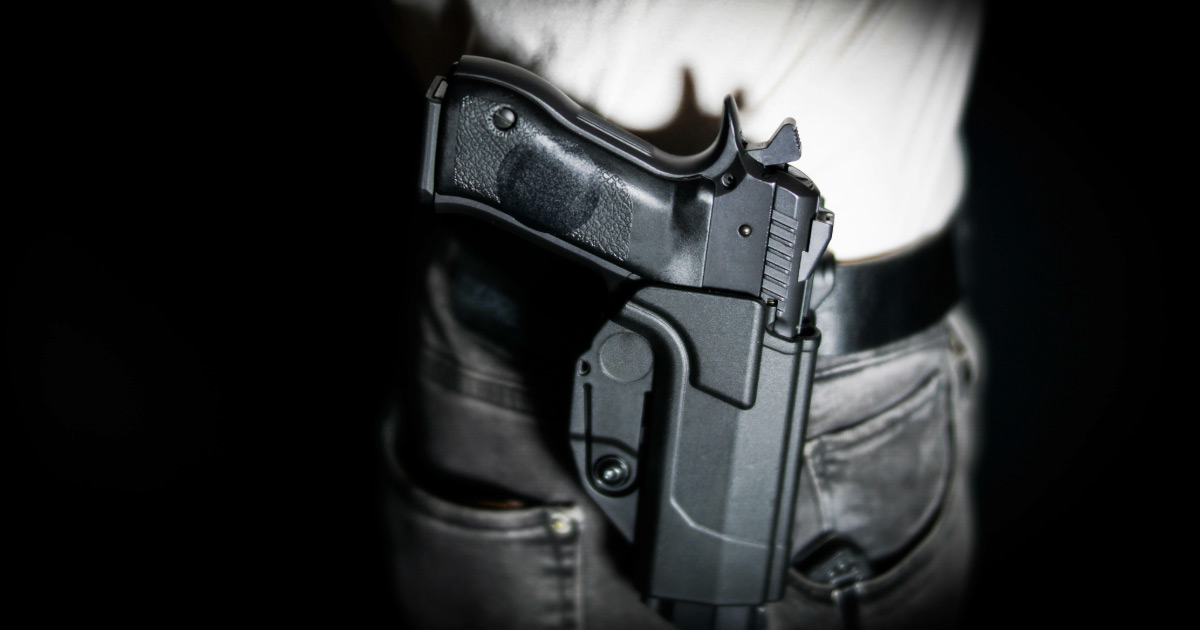
Arizona has constitutional carry gun laws that allow any residents who are over the age of 18 to legally open-carry a gun without any special permits, licenses, or registration cards. Constitutional carry laws also allow for any resident over the age of 21 to conceal carry a firearm, again without any permits, license, or registration card. Although Arizona has some of the least restrictive firearm laws, there are still a few places where you are not allowed to carry your gun, like on school grounds, polling locations, hydroelectric or nuclear power stations, correctional facilities, or any other location prohibited by federal law.
Common Weapons For Self-Defense
While some people feel comfortable carrying a firearm for self-defense, not everyone is willing or able to do so. There are a variety of other options available for those who wish to protect themselves, each with advantages and disadvantages. Therefore, it is important to choose the one that best suits your needs.
#2 Stun Guns & Tasers

Stun guns and tasers are very popular alternatives as self-defense weapons. Both use electrical currents to immobilize attackers and are non-lethal forms of self-defense weapons. It is legal to own and carry both stun guns and tasers without a permit in Arizona.
#3 Pepper Spray
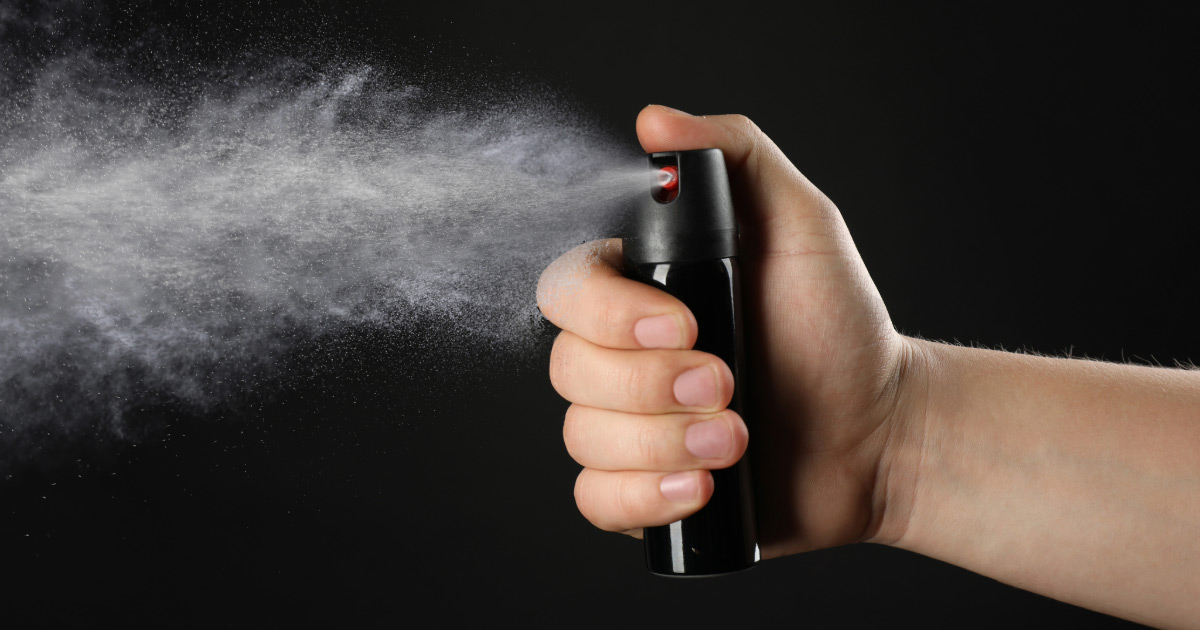
Pepper spray is another very common, non-lethal self-defense weapon. Pepper spray canisters, sometimes called “Pepper spray guns,” are generally conveniently sized to make them easy to carry in bags, purses, or on keychains, making them especially popular self-defense weapons for women. It is legal to buy, carry, and use pepper spray in Arizona for self-defense.
#4 Knives
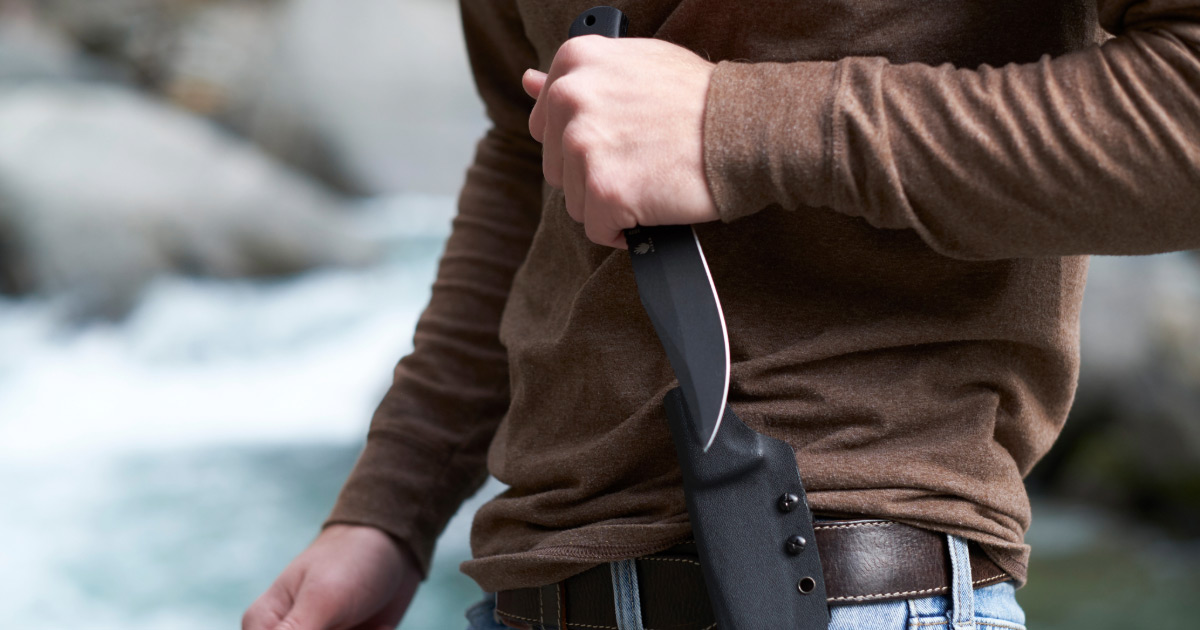
Unlike stun guns or pepper spray, knives can be considered deadly weapons; however, that does not mean that it is illegal to carry knives for self-defense. Any person carrying a self-defense knife must abide by the same laws regulating concealed carry. For any citizen aged 21 and older, there are no restrictions for the length of the blade, closure type, or the number of edges a knife may have. Someone below the age of 21 cannot carry any knife larger than a pocket knife with a blade under 4 inches.
Flagstaff Firearms & Weapons Crime Law Firm
Despite our best efforts, it is impossible to guarantee that you will never be faced with a potentially dangerous situation. Because of this many people will choose to carry a self-defense weapon. Carrying a self-defense weapon is not without risk. You need to know how and when it can be used properly to avoid hurting yourself or those around you while defending against an attacker, Arizona’s self-defense laws can be difficult to navigate and many people have questions like “Are self-defense weapons legal?”
Once you understand all of the intricacies of Arizona’s self-defense laws, you will not only know what weapons are legal to carry but also be able to make the best decisions about which suits your needs best. The attorneys at Antol & Hance, PC are Flagstaff’s go-to resource for anyone looking to learn more about Arizona’s self-defense laws. If you have questions contact us today!
Our Flagstaff lawyers are here to help you understand your rights and legal options. If you have questions about self-defense laws, weapons charges, or what to do after an incident, contact our team to discuss your situation.
9 FAQs About Arizona Self-Defense Weapons

There are a lot of questions about weapons and ownership legalities here in Arizona. If you’re unsure about a weapon charge you’ve received, reach out to our team of legal experts today to get assistance. Otherwise, here are several questions that are regularly asked about owning weapons in Arizona.
#1 Is pepper spray/mace legal in Arizona?
A lot of residents are wondering if it’s legal to carry pepper spray, or even bear spray, on their person. In Arizona, there are special laws that explain the legal use of “deadly” weapons; however, since pepper spray is a non-deadly tool for self defense it is totally legal here.
When it comes to personal safety, it’s always important to protect yourself the best way that you can. Carrying pepper spray can be a great solution if you need protection. Pepper spray is easy to carry and use, and very effective against any attacker. It could stop an aggressor, giving you time to escape the situation.
#2 Are tasers/stun guns legal in Arizona?
Tasers and stun guns are generally legal to own and carry in Arizona. However, there are still laws governing how these devices can be purchased and used.
For example, under ARS §13-3117, knowingly using or threatening to use a remote stun gun against a law enforcement officer who is performing official duties is a Class 4 felony. Even when a taser or stun gun is legal to possess, how it is used during an incident can still lead to criminal charges
#3 Which self-defense weapons are illegal in Arizona?
Arizona allows people to possess many types of weapons, but that does not mean every weapon is legal or that any weapon can legally be used in self-defense.
Arizona law identifies certain prohibited weapons and devices. These can include:
- Certain bombs and improvised explosive devices (IEDs)
- Molotov cocktails and similar incendiary devices
- Certain grenades
- Certain rockets and missiles
- Certain explosive, incendiary, or poison gas devices
Whether possessing or using a particular weapon is legal can depend on the type of weapon, where it is carried, how it is used, and other circumstances surrounding the incident. If you are facing a charge involving a prohibited weapon in Arizona, contact a criminal defense attorney to discuss your situation and better understand your legal options.
#4 Are brass knuckles illegal in Arizona?

Arizona does not have a statewide ban on adults possessing brass knuckles. However, local laws may be more restrictive. For example, Chandler and Gilbert have restrictions involving minors, while Tempe has broader restrictions on brass knuckles.
Even where possession is legal, using brass knuckles to threaten or harm someone can still lead to criminal charges. If you are facing charges after an incident involving brass knuckles or another weapon, contact an Arizona criminal defense attorney to better understand your rights and legal options.
#5 Are blackjacks/slapjacks/saps legal in Arizona?
The legality of blackjacks, slapjacks, saps, and similar weapons can depend on both Arizona law and local ordinances. Some Arizona cities have additional restrictions on certain weapons that may not apply statewide.
For example, Yuma has a local ordinance addressing the manufacture, sale, and possession of certain weapons, including blackjacks. Because local laws can vary, it is important to check the rules that apply where you live or carry the weapon.
If you are facing a charge involving a blackjack, slapjack, sap, or another weapon, contact an Arizona criminal defense attorney to discuss your situation and better understand your legal options.
#6 Are batons / pop-out sticks legal in Arizona?
Collapsible batons, also called telescoping or collapsing sticks, are allowed in Arizona. It’s against the law to have a dangerous weapon hidden or in a car in Arizona if you’re under 21. But, Arizona doesn’t see a baton as a dangerous weapon because it wasn’t made to kill. So, you can carry it hidden or in your car at 18.
#7 Is it legal to carry a knife for self-defense in Arizona?
Arizona residents want to know the legalities of owning and carrying a knife and have a lot of questions. For example, can a knife be carried for self-defense, what styles and sizes of knives are permitted, can a minor carry a pocket knife, and so on.
ARS 13-3120 regulates knives in Arizona and “Knife” refers to any cutting device that has a sharpened or pointed blade.
Under this statute, a deadly weapon is anything that is made for or that could be applied for deadly use. The term definitely includes a gun, but does not specifically include knives. Knives are usually seen as tools. However, people who carry knives must follow laws about hidden weapons or that stop them from bringing them into certain places (like courtrooms and other government buildings).
A pocket knife is a folding knife with a blade shorter than 4 inches. It isn’t seen as a deadly weapon under ARS 13-3102, and a person of any age can legally carry a pocket knife hidden on them, or close by in or on transportation. However, even those who carry pocket knives might have to follow the rules for hidden weapons or that ban them from some places (like courtrooms and other government buildings).
#8 Which traditional martial arts weapons are legal to own in Arizona?

Many traditional martial arts weapons may be legal to own in Arizona, but the rules can depend on the type of weapon, how it is carried or used, and whether local restrictions apply.
For example, Arizona removed nunchaku from the state’s definition of prohibited weapons in 2019. Other weapons may still fall under Arizona’s laws governing deadly or prohibited weapons depending on their design and use.
Even if a martial arts weapon is legal to own, using it to threaten or harm another person outside of lawful self-defense can lead to criminal charges
#9 Can I have a firearm in my vehicle in Arizona?
Most of the time, yes. But it also matters how old you are and how you’re carrying it in the car. For example, Arizona’s “Constitutional Carry” law (started July 29, 2010) lets any citizen who can legally own/buy a gun and is 21 years or older to have it loaded and hidden on them without needing any kind of permit or license anywhere in the vehicle.
For people 18 to 20 years old, the law is different. It is illegal to carry a hidden gun in or on a vehicle if under 21 years old. Guns carried in a vehicle must be kept in a case, holster, storage box, trunk, bag, luggage, or glove box of the vehicle.
ARS §13-3102 lets people 18 to 20 years old keep a gun in their car as long as the gun is in a case, holster, scabbard, bag or luggage, or
it’s in a storage area, map pocket, trunk or glove box; also, if the gun is in a holster, it can be hidden anywhere in the car without breaking the law but this doesn’t allow an 18 to 20 year old to hide an unholstered gun under his seat; people 18 to 20 years old can openly carry a loaded gun on them while inside their car as long as the gun or holster holding the gun is visible.
#10 What should I do if I’m facing a weapons charge in Arizona?
If you have been arrested, cited, or are being investigated for an incident involving a weapon, what you do next can matter. Avoid discussing the details of your case publicly or posting about the incident on social media, and consider speaking with a criminal defense attorney about your situation.
An Arizona criminal defense attorney can help you understand the charges you are facing, your rights, and what to expect as your case moves forward.
Facing a Weapons Charge? Talk to Our Team